Viewing entries in
biosciences

Attacking Cancer: A Golden Opportunity

Comment

Attacking Cancer: A Golden Opportunity

You don’t have to be a historian to grasp the significant impact gold has made in the world. From a sought-out treasure to a method of currency, there’s no doubt that this element is one of the most influential metals in human history. Yet, a much less known aspect of gold is its incredible potential in biomedicine. This is especially true of gold nanoparticles in the context of cancer.


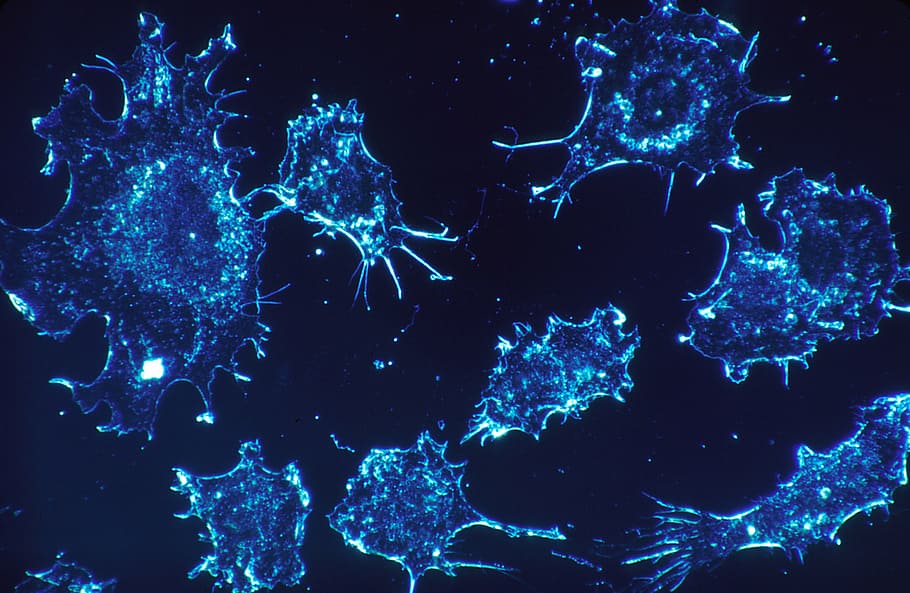
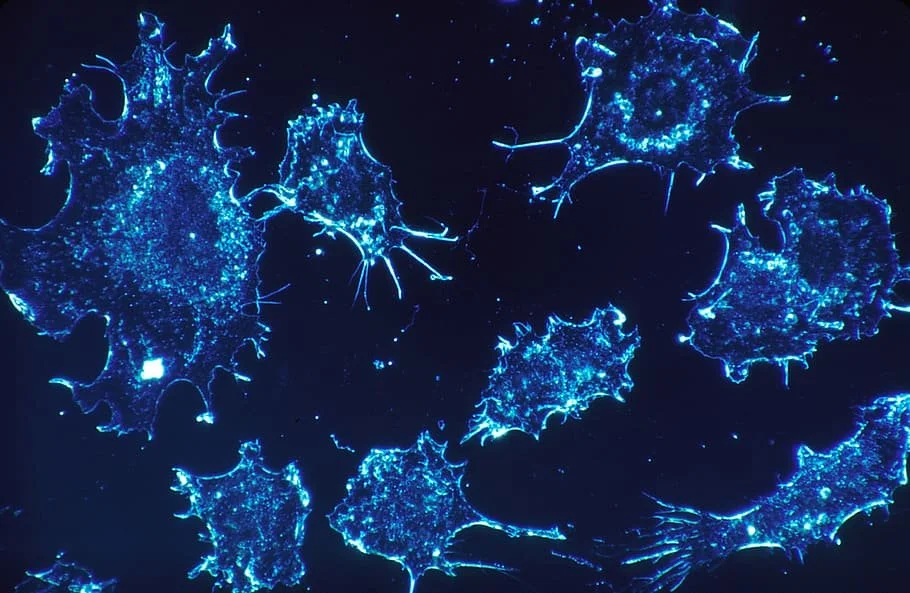
Cancer is a condition wherein cells proliferate and divide in an uncontrolled manner. [1] While cancer can often be treated, the side effects of those treatments can be severe and can include possibly hurting non-cancer cells and the immune system. Inducing hyperthermia, or causing a part of the body to heat up, has been shown to have an anticancer potential as it can lead to programmed cell death as well as make tumors more susceptible to radiotherapy. Yet, a central issue arises: unless the heat is localized, other parts of the body can be harmed. This is where gold nanoparticles come in. [2]


In the simplest terms, gold nanoparticles are small pieces of gold. Very small pieces of gold. As a result, gold nanoparticles have a lot of different properties compared to, say, a block of gold that we often think about when talking about the element. For instance, gold nanoparticles are not yellow: particles less than 100 nm are red while bigger particles are blue/purple. [3] These nanoparticles have amazing properties which allow them to act as a contrast in CT scans or assist with drug delivery. [4] Yet, one of the most fascinating applications of these gold nanoparticles is their use in photothermal therapy. Because the blood vessels near the tumor site are often leaky, gold nanoparticles that have been placed in a cancer patient's body will passively concentrate near a tumor. Once they have concentrated, they can be activated by near-infrared light, a special type of light which can easily pass through human tissues. The gold nanoparticles will absorb the light energy and convert it to heat energy near the tumor, essentially stimulating the cancer cells’ deaths. [2]


Has this technique been tested in humans? In fact, yes–a clinical trial done at Mt. Sinai hospital which used gold-silica nanoparticles to treat prostate cancer patients revealed no severe side effects from the treatment. After the gold nanoparticles had concentrated at the tumor site of the patients, they were irradiated by near-infrared light from optical fibers. These nanoparticles absorbed the light and heated the tumor site, essentially destroying it. [5]


The promise of such a localized treatment strategy is encouraging. Hopefully, further research can be done to explore this opportunity that is, indeed, worth its weight in gold.


References

[1] Gupta, N.; Malviya, R. Understanding and advancement in gold nanoparticle targeted photothermal therapy of cancer. Biochimica et Biophysica Acta (BBA) - Reviews on Cancer [Online] 2021. 1875, 188532. https://www.sciencedirect.com/science/article/pii/S0304419X21000305?via%3Dihub (accessed November 2021)

[2] Vines, J.B.; Yoon, J.-H.; Ryu, N.-E.; Lim, D.-J.; Park, H. Gold nanoparticles for photothermal cancer therapy. Front. Chem. [Online] 2019. 7, 167. https://www.frontiersin.org/articles/10.3389/fchem.2019.00167/full (accessed November 2021) 

[3] Sztandera, K.; Gorzkiewicz, M.; Klajnert-Maculewicz, B. Gold Nanoparticles in Cancer Treatment. Mol. Pharmaceutics [Online] 2019. 16, 1-23. https://pubs.acs.org/doi/10.1021/acs.molpharmaceut.8b00810 (accessed November 2021)

[4] Wang, S.; Lu, G. Noble and Precious Metals - Properties, Nanoscale Effects and Applications. In Applications of gold nanoparticles in cancer imaging and treatment; Intechopen: Online, 2017.

[5] Stephens, M. PhysicsWorld. https://physicsworld.com/a/gold-nanoshell-based-cancer-treatment-is-safe-for-the-clinic/ (accessed November 2021)

[6] Pxfuel. https://p1.pxfuel.com/preview/830/131/627/cancer-cells-cells-scan-electron-microscope-scan.jpg (accessed November 2021)

Comment


What the Oink? Pigs May Hold the Key to our Transplant Troubles

Comment

What the Oink? Pigs May Hold the Key to our Transplant Troubles

In 1954, John Murray of Harvard Medical School commenced a new era in modern medicine by performing the first successful kidney transplant in a human patient [1]. 67 years later, organ transplantation is a widely-utilized medical procedure, frequently used to combat organ failure and a variety of other diseases. The new hurdle in this field of transplantation surgery is the ever-growing list of patients in need of new organs with no way for the supply to ever meet the demand. There currently are over 100,000 patients on the US transplant waiting list, many of whom depend on the hope of organ transplantation as their last chance of survival [2]. To combat this mismatch between the supply and demand of transplantable organs, scientists have been looking to other organisms in hopes that cross-species transplantations could alleviate some of the issues that make the organ transplant list so intimidatingly long.


The concept of organ transplantation using donor organs from non-human organisms is not a completely novel idea. In the 1960’s, a surgeon at Tulane University, Keith Reemtsma, transplanted kidneys from chimpanzees to 13 human patients as a last resort treatment option (these procedures would likely not fly under today’s ethical guidelines). While one of Reemtsma’s patients had a short recovery term of around 8 months, all of these transplanted organs ultimately failed due to immune rejection by the human recipient [3]. The human immune system mounts a significant immune response to transplanted organs, triggered by specific sugars present on the external surfaces of transplanted organs and their cells. For instance, the alpha-gal sugar present on pig kidneys makes successful transplantation of organs from the native organism to humans impossible [4]. Genetic engineering technology has allowed scientists to remove sugars from potential donor organisms, facilitating the first successful transplant of a pig organ to a human in mid-October of this year. 


At NYU’s Langone Health, physicians transplanted a kidney from a pig genetically engineered to lack the alpha-gal sugar, and the kidney remained viable for 54 hours [5]. The patient had been considered brain dead for about a month before the procedure took place, and their organs were deemed unusable for transplantation into another patient. Upon consent of the family, physicians at NYU performed the xenotransplantation and observed healthy urine output for 54 hours after the procedure (54 hours was the length of time deemed ethical by a board of medical ethicists — the experiment was ended after that period of time) [4]. 


This procedure validates the assumptions that removing immune system-triggering sugars from the surface of transplant organs can prevent immediate rejection by the host. While this is just a small step in the direction of making xenotransplantation a universally accepted treatment option, it opens the possibilities for future clinical work and applications. Due to the manifold of ethical issues surrounding human clinical trials, progress in this area of research will inevitably be quite slow. However, slow progress is a small price to pay to avoid repeating the same mistakes as past xenotransplantation experiments. 

References

[1] A transplant makes history – Harvard Gazette https://news.harvard.edu/gazette/story/2011/09/a-transplant-makes-history/ (accessed 2021 -11 -29).

[2] Organ Donation Statistics | organdonor.gov https://www.organdonor.gov/learn/organ-donation-statistics (accessed 2021 -11 -29).

[3] Cooper, D. K. C. A Brief History of Cross-Species Organ Transplantation. Baylor University Medical Center Proceedings 2012, 25 (1), 49–57. https://doi.org/10.1080/08998280.2012.11928783.

[4] What the successful test of a pig-to-human kidney transplant means | Science News https://www.sciencenews.org/article/xenotransplantation-pig-human-kidney-transplant (accessed 2021 -11 -29).

[5] U.S. surgeons successfully test pig kidney transplant in human patient | Reutershttps://www.reuters.com/business/healthcare-pharmaceuticals/us-surgeons-successfully-test-pig-kidney-transplant-human-patient-2021-10-19/ (accessed 2021 -11 -29).

Comment


The New Climate History Record: An Unsettling Future

Comment

The New Climate History Record: An Unsettling Future

Forty-five years ago, scientists J.P. Kennett and N.J. Shackleton found that deep-sea microscopic plankton (benthic foraminifera) could provide a reliable isotope record of Earth’s fluctuations in global carbon emissions, sea water composition, and deep-sea temperature [1]. Ever since, scientists have been studying these creatures to develop a comprehensive record of the major climate shifts over the last 66 million years (the Cenozoic era).

However, this record was compiled nonlinearly over the course of decades, and it lacked the completeness needed to analyze climate variability resulting from changes to Earth’s orbit. On September 10 of this year, Westerhold et al. at the University of California-Santa Cruz published a paper that detailed a more comprehensive climate record of the Cenozoic, which they developed by refining some of the previously collected isotope data, as well as collecting some of their own [2]. This record had a high enough resolution to perform analysis that was once thought impossible, providing valuable insight on the state of our climate in comparison to Earth’s orbital variations over the past 66 million years.

After compiling this comprehensive history into a dataset called CENOGRID, the team discovered important correlations between the climate’s response to orbital variations and variables such as greenhouse gas levels, global temperature, and polar ice caps. They found that Earth’s climate could be divided into four distinctive states throughout the Cenozoic: Hothouse, Warmhouse, Coolhouse, and Icehouse. Each of these states are characterized by differences in the climate’s responsiveness to astronomical occurrences (i.e. changes to Earth’s orbit that affect solar energy access) [2].

In the Hothouse and Warmhouse states, the climate tended to respond to orbital variations in a more predictable manner, whereas the Coolhouse and Icehouse periods saw a much less predictable response in the climate to astronomical changes. The cause of unpredictability is an increase in responsiveness to orbital events attributable to the existence of ice caps, as well as the lower greenhouse gas levels characteristic of the Icehouse and Cool House eras [2]. It is important to note that unpredictable responsiveness is actually beneficial to us because it means there is a buffer between astronomical changes to Earth’s orbit and climatic changes here on Earth.

So how does this bit of history relate to our problems today?

According to the study’s co-author, James Zachos, the modern trends of rising greenhouse gasses and diminishing polar ice caps means we are approaching a new Hothouse period at an alarming rate (on the scale of hundreds of years rather than millions). If we reach a Hothouse state similar to the one 50 million years ago, we will be at the mercy of eccentricity changes and have less of a barrier to astronomical events [3]. This could lead to major climatic unrest and completely alter our way of life.

To a country about to leave the Paris Climate Agreement, this record should be especially terrifying. The more steps we take away from changing our habits, the closer we are to this type of future.

References:

[1] KENNETT, J., SHACKLETON, N. Oxygen isotopic evidence for the development of the psychrosphere 38 Myr ago. Nature 260, 513–515 (1976). https://doi.org/10.1038/260513a0

[2] Westerhold, Thomas et al. “An Astronomically Dated Record of Earth’s Climate and Its Predictability over the Last 66 Million Years.” Science (American Association for the Advancement of Science) 369.6509 (2020): 1383–1387. Web.

[3] Earth barreling toward “Hothouse” state not seen in 50 million years, epic new climate record shows | Live Science https://www.livescience.com/oldest-climate-record-ever-cenozoic-era.html (accessed Oct 11, 2020).


Comment


Low-carb Locusts: Fighting a Modern-Day Plague

Comment

Low-carb Locusts: Fighting a Modern-Day Plague

“By morning the wind had brought the locusts; they invaded all Egypt and settled down in every area of the country in great numbers...They covered all the ground until it was black. They devoured all that was left after the hail--everything growing in the fields and the fruit on the trees. Nothing green remained on tree or plant in all the land of Egypt.” (Exodus 10:13-15).

The plague of locusts is one of the most striking images from the Old Testament of the Bible. As punishment for Pharaoh’s enslavement of the Israelites, God unleashes a massive swarm of insects upon Egypt, so large that it blocks out the sun. The insects soon ate away all vegetation in the country, plunging Egypt into famine. And though it seems too bizarre and terrifying to be anything more than a biblical story, locusts are still a major threat to 10% of our world population today [1].

A desert locust [5].

A desert locust [5].

Locusts are actually a type of grasshopper. However, out of the 20,000 species of grasshoppers in the world, only 19 of those species are capable of undergoing the locust transformation [2]. They are harmless in small numbers, just like the grasshoppers that you can catch in your own backyard. But when large numbers of these particular species are crowded together, they undergo a fascinating transformation that NPR’s Joe Palca describes on the podcast Short Wave. “...What happens is there’s a change, a physical change in the brain, the wing size, the coloration, that happens because certain species of grasshoppers when you pack them together, literally just pack them together...they turn into this thing that we know as locusts” [2]. Close proximity to other grasshoppers transforms harmless jumping insects into ravenous, destructive beasts, often likened to Dr. Jekyll and Mr. Hyde [2].

Map detailing the areas affected by the desert locust. Swarms (indicated by the red circles) are the most destructive [6].

Map detailing the areas affected by the desert locust. Swarms (indicated by the red circles) are the most destructive [6].

Currently, a specific species known as the desert locust is a serious problem in the global south, specifically the horn of Africa, a region that includes Ethiopia, Somalia, and Kenya [3]. Recent heavy rainfall in the region has increased locust breeding, resulting in huge swarms of up to 80 million insects per square kilometer that can fly over 100 kilometers every day [1]. In Ethiopia, they devour up to 1.8 million tons of vegetation daily, and are on their way to becoming a plague of biblical proportions [1]. 

Threat level to crops of the desert locust in affected areas [7].

Threat level to crops of the desert locust in affected areas [7].

Because of the enormous threat that locust swarms pose to the food security of those living in the horn of Africa, as well as along the border between India and Pakistan further east, scientists are desperately searching for sustainable control measures. Pesticides aren’t practical: they can be toxic to farmers’ crops and livestock, and the locusts are too widespread to be greatly affected [2]. However, current research in a lab at Arizona State University has suggested that diet might be the key to controlling the plague. Arianne Cease, lead researcher and founder of the Global Locust Initiative, has found that locusts prefer a diet high in carbohydrates (sugars) compared to one high in protein [1,2]. Manipulation of the soil can control the carbohydrate-to-protein ratio in grain crops like millet: healthy soil produces protein-rich grain, while nutrient-poor soil produces grain that is high in carbohydrates [2]. Based on the locusts’ affinity for carbohydrates in a laboratory setting, Cease and her team believe that enriching the soil in affected areas could reduce damage to crops: “If the farmers can be talked into keeping their fields in good shape by fertilizing them and making sure there’s not a lot of runoff...it will be growing a crop that the locusts are less likely to eat” [2].

Is dieting really a feasible solution to the locust plague? The idea must be put to the test in the affected regions before we know for sure. Currently, a trial in Senegal is implementing new fertilization techniques to find out whether a high-protein diet reduces the impact of the Senegalese grasshopper, a locust that is less aggressive than the desert variety [2]. So far, the results look promising: early findings indicate that improving soil fertility can reduce locust numbers by half [1]. Hopefully by better equipping farmers to protect and nourish their land, we can bring the desert locust’s reign of terror to an end, forcing them to endure everyone’s worst nightmare: a strict no-carb diet.

References

  1. Ahuja, A. (2019, December 17). Locust swarms refocus attention on an old enemy. Retrieved February 12, 2020, from Financial Times website: https://www.ft.com/content/32c66414-20be-11ea-b8a1-584213ee7b2b

  2. Davis, R., Le, V., Sofia, M., & Palca, J. (Producers). (2020, January 22). Can A Low-Carb Diet Prevent A Plague Of Locusts? NPR Short Wave. Podcast retrieved from https://www.npr.org/2020/01/21/798163143/can-a-low-carb-diet-prevent-a-plague-of-locusts.

  3. Food and Agriculture Organization of the United Nations. (2020, February 10). Desert Locust situation update. Retrieved February 12, 2020, from Locust Watch website: http://www.fao.org/ag/locusts/en/info/info/index.html.

  4. Nunn, D. (2014, March 14). Desert locust [Photograph]. Retrieved from https://www.flickr.com/photos/davidnunn

  5. Kamal, R. (2020, January 22). Desert locust (Schistocerca gregaria) [Photograph]. Retrieved from https://www.npr.org/2020/01/21/798163143/can-a-low-carb-diet-prevent-a-plague-of-locusts.

  6. Current desert locust situation [Image]. (2020, February 10). Retrieved from http://www.fao.org/ag/locusts/en/info/info/index.html

  7. Situation & threat of desert locust [Image]. (2020, February 10). Retrieved from http://www.fao.org/ag/locusts/en/info/info/index.html.

Comment


Edgar Allan Poe and CO: The Dangers of Carbon Monoxide Poisoning

1 Comment

Edgar Allan Poe and CO: The Dangers of Carbon Monoxide Poisoning

The year is 1849. On a rainy day in Baltimore, Joseph W. Walker, an editor for the Baltimore Sun, comes across a man lying in the gutter on the side of the road, delirious and barely conscious[1]. Recognizing him instantly, Walker seeks medical attention and writes a letter to one of the gentleman’s acquaintances in Baltimore asking for help [1]. Unfortunately, it is too late: he never regains consciousness, and dies just 4 days later [1]. Though the circumstances of his death are mysterious and intriguing by any standards, they are made even more so by the fact that the man was Edgar Allan Poe.

How did Poe, the esteemed writer and poet, master of mystery and the macabre, end up like a character in one of his own short stories? Multiple theories--some more plausible than others--attempt to explain the mystery, including alcoholism, heavy metal poisoning, rabies, and murder [1]. None have been proven. Yet one theory finds basis not only in Poe’s death, but his life as well: carbon monoxide poisoning.

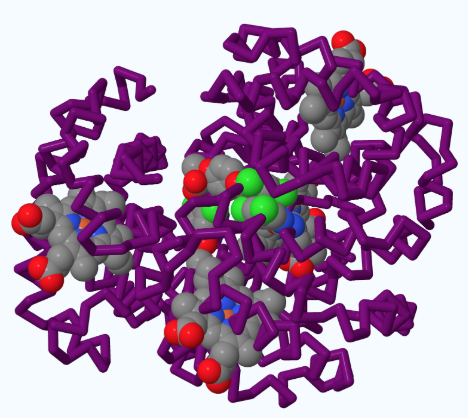
Known as “the silent killer” due to its lack of color or odor, carbon monoxide gas acts by binding to hemoglobin, the protein in our blood responsible for carrying oxygen to the tissues [2]. Carbon monoxide has a much higher affinity for hemoglobin than oxygen, meaning that it binds more tightly and is able to outcompete oxygen for binding space [2]. As a result, there is less oxygen available for our brain and tissues, leading to disastrous consequences [2]. Short-term symptoms include headache, nausea, and weakness; long-term exposure can cause coma or death [2].

Ball-and-stick model of hemoglobin, the protein responsible for carrying oxygen in our blood.

Ball-and-stick model of hemoglobin, the protein responsible for carrying oxygen in our blood.

It is very likely that Poe was exposed to carbon monoxide on a regular basis: light fixtures of the era functioned through the burning of coal, which produced fumes that contained high levels of CO [3]. Additionally, chronic, low-level carbon monoxide exposure often isn’t immediately diagnosed because symptoms are much more subtle and may manifest in diverse ways [2]. One of these symptoms is partial facial paralysis caused by nerve damage from a lack of oxygen [3]. Pictures of Poe’s face exhibit the tell-tale slanting of the eyes and mouth, a hallmark of low-grade CO exposure [4]. 

Photo of Poe taken in 1849, original and colorized, showing slight slanting of the eyes and mouth that is indicative of chronic CO exposure [6].

Photo of Poe taken in 1849, original and colorized, showing slight slanting of the eyes and mouth that is indicative of chronic CO exposure [6].

In addition, many of the characters in Poe’s works exhibit the delusion and paranoia that are symptomatic of CO poisoning[4]. In The Tell-Tale Heart, the narrator believes he can hear the beating heart of his victim underneath the floorboards. In The Black Cat, a man is haunted by the pet that he killed in a drunken rage. The list goes on[5]. Poe’s own delirium and vivid hallucinations just before his death might also have been a product of carbon monoxide exposure: in his last moments, the grisly and haunting stories of his works became his reality [1].

Ultimately, there is no way to prove that either Poe’s inspiration for his works or his ultimate demise were results of chronic carbon monoxide poisoning. His cause of death was officially listed simply as “phrenitis,” or swelling of the brain[1]. However, understanding the subtle symptoms of CO exposure could be the key to saving a life in the present day. And even if it isn’t true, it is interesting to consider that the morbid and fantastical worlds imagined in Poe’s works could be rooted in science after all.

References:

  1. Geiling, Natasha. "The (Still) Mysterious Death of Edgar Allan Poe." Smithsonian.com. Last modified October 7, 2014. Accessed December 2, 2019. https://www.smithsonianmag.com/history/still-mysterious-death-edgar-allan-poe-180952936/

  2. Blumenthal, Ivan. "Carbon Monoxide Poisoning." Journal of the Royal Society of Medicine 94, no. 6 (June 2001). Accessed December 2, 2019. https://doi.org/10.1177/014107680109400604

  3. Otterbein, Leo E. "Quoth the Raven: Carbon Monoxide and Nothing More." Medical Gas Research 3, no. 7 (March 6, 2013). Accessed December 2, 2019. https://doi.org/10.1186/2045-9912-3-7

  4. "Edgar Allan Poe and the Tell-Tale Face of Carbon Monoxide Poisoning." Multiple Chemical Sensitivity. Last modified October 24, 2006. Accessed December 2, 2019. http://www.mcsrr.org/poe/

  5. "An Exploration of Short Stories by Edgar Allan Poe." PoeStories.com. Accessed December 2, 2019. https://poestories.com/summaries.php

  6. Pat. Edgar Allan Poe 1849. Photograph. Flickr. June 1, 2016. Accessed December 2, 2019. https://www.flickr.com/photos/patseg

  7. Edumol Molecular Visualization. Hemoglobin. Image. Flickr. March 23, 2017. Accessed December 2, 2019. https://www.flickr.com/photos/edumendo.

1 Comment