Isabella Wu
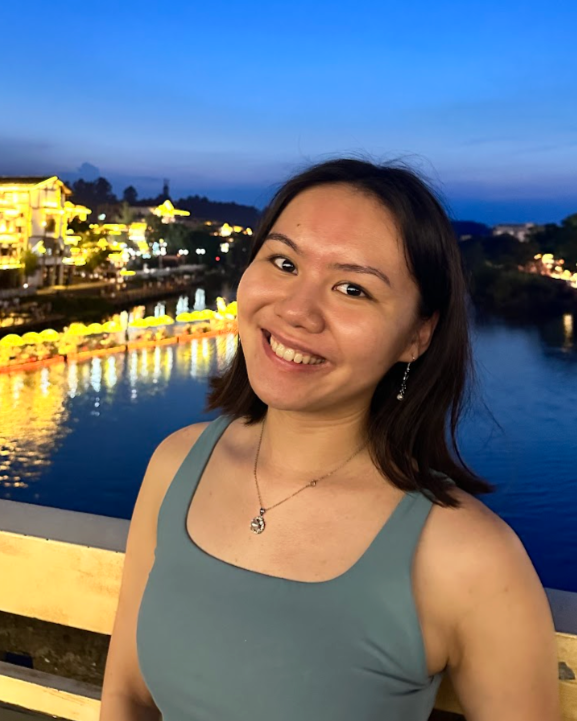
Design + Connections | Duncan | Co ‘29
“The Wonders of Phototherapy: How light can save the lives of over 60% of babies.”
My sister goes to UT, and she has a very similar journal program, and she encouraged me to join [Catalyst]. Right now, I’m working as a designer and also as a writer. I wanted to do design, because I’ve always been interested in it, but there haven’t been many opportunities before…I’m designing for a journal from last year that didn’t get published about bacteriophages, and I’m writing about jaundice and phototherapy…My sister told me about a company that was looking into jaundice and creating a new device that uses phototherapy to cure it. I thought that sounded amazing, because I didn’t know that light could cure a disease. When I started looking into it, I found out that around 60% of babies get jaundice, which is kind of crazy high ... .Jaundice happens because there’s excess bilirubin in the body, and babies don’t have fully functioning livers yet. Phototherapy works because light breaks down the bilirubin through photo isomerism, turning it into something water soluble so it can be washed away through urine. It’s wild that something so simple can be life-saving, because if jaundice goes untreated, something fatal can happen…I’ve always liked explaining science in a way that’s more approachable. I even made a YouTube channel earlier where I explained science topics in a fun way. I like topics that are super applicable to daily life and feel like they should be shared ... .I think what people don’t realize is how many rounds of drafting and how many hours go into every article, whether it’s design, writing, or editing.”
Ashely Boscco
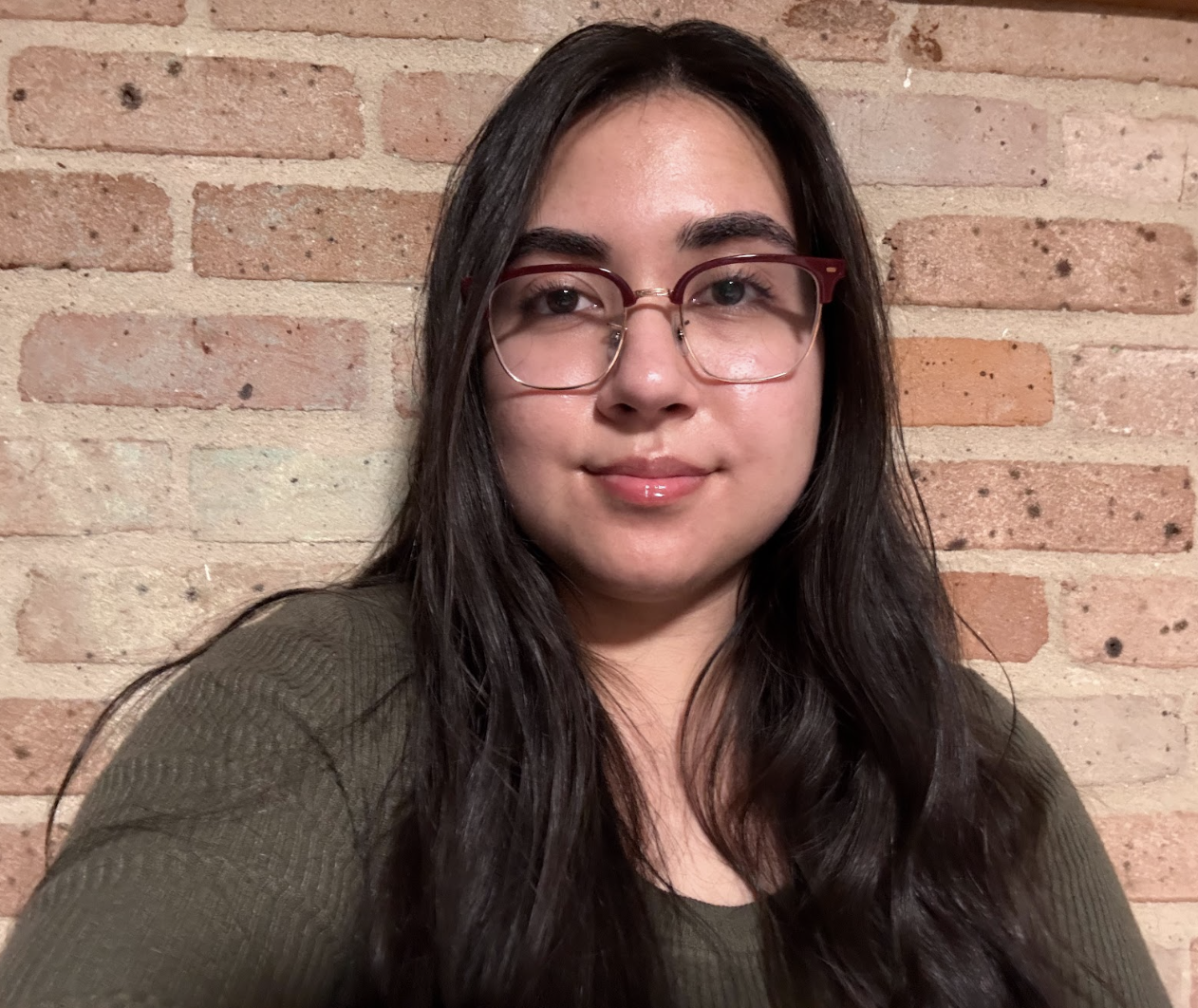
Discoveries | Lovett | Co ‘27
“How Stevia (sugar substitute) could have potential in the cancer research field”
I worked on a 500-word article about Stevia, the sugar packet, and how some of its components might have anti-cancer properties. It’s not super well developed yet as a field, but I thought it was interesting, especially because Stevia is such a recognizable name. I liked the idea of connecting something familiar to science like the gut microbiome and cancer…I narrowed my interests down to microbiology, cancer, and neurodegenerative diseases, and then I just started searching databases. I found this paper through ecancer.org, and the little blurb about it really jumped out at me. That’s usually how I start, reading newspaper articles or blog-style science pieces first to get the bigger picture, and then diving into the actual research paper. The hardest part for me was balancing the tone. I knew the structure I wanted: a hook, introducing Stevia, explaining the components, how it works, and then the limitations, but adding the scientific detail without over-explaining or under-explaining was difficult. My editor was really helpful with that. Writing for Catalyst is different from writing for classes. If you add too many scientific details, you have to explain everything, and then the reader is just like, ‘Why do I care about this?’...This was actually my first piece writing for Catalyst, even though I’ve edited before. I thought I’d have an advantage because I knew the tone, but outlining was harder than I expected, figuring out how to bring the hook back in, how to make everything feel cohesive. Through the process, I learned a lot about how I like to plan and organize my thinking….I used to read Catalyst articles as a freshman, just as a casual reader, and I remember thinking they were so well thought out and organized. It honestly made me feel like I couldn’t write like that. But going through the process, especially the long editing cycles, you realize how much work goes into that polished piece. Seeing all that specialized research turn into a cohesive, compelling story was really rewarding. It felt meaningful, like I was doing real work. And I think that’s what I learned, that anybody can write like this if you put your heart into it and choose a topic you’re genuinely interested in. You don’t need to be an amazing writer to start.
Grace Zhang
Attractions | Hanszen | Co ‘29
“Seeing Isn’t Believing: The Great Blind Spot Cover-Up”
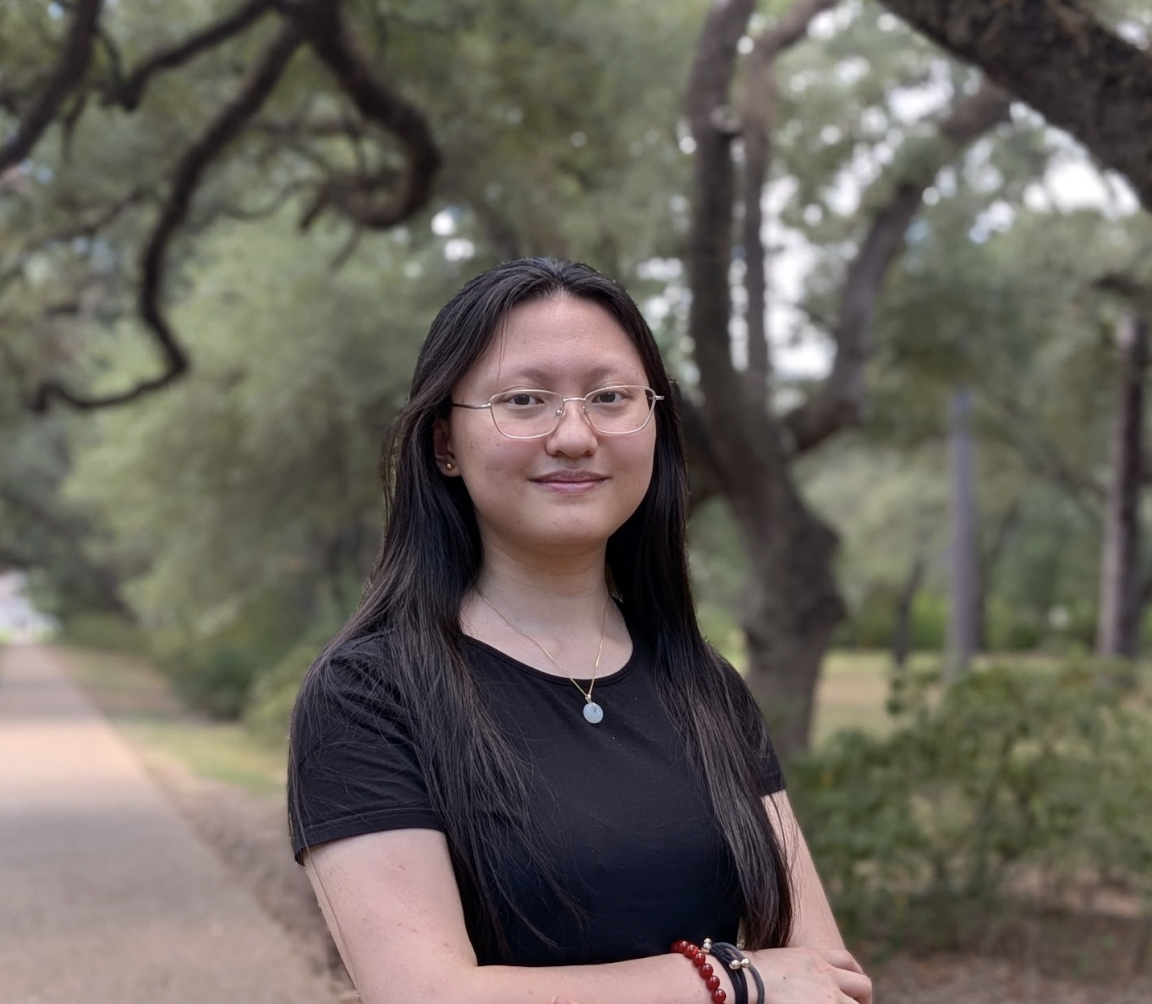
I’ve always liked writing since I was young. I wrote creatively when I was younger–short stories and poems–and I always knew I’d be a STEM major. So science plus writing just felt like combining my two biggest interests….For Attractions, I worked on a Blind Spots article. It’s about how there’s a small patch in our vision where we don’t actually get any information–because where the optic disc connects, there are no rods or cones. So whenever we look at anything, we’re missing data from that area. But the brain disguises it by coming up with what it thinks should be there. I included this little test–a cross and a circle–and if you move the screen just right, the other object disappears. I thought it was really cool…Originally, I thought it would just be a quick read about this cool thing the eye does. But it expanded into something bigger. And honestly, the time just flew by while I was writing. That’s how I realized how much I really enjoy science writing. I don’t know if it’ll be a career, but I definitely want to stay involved…When I write, I usually start with a quick outline–just what I want to cover. Then I go into the physiology, the anatomy of the eye, and also the neuroscience side–things like predictive coding. I even brought in some linguistics without realizing it at first. What started as something specific to vision turned into something about how the brain hides inconsistencies from us in general. The biggest challenge was finding a variety of academic sources and figuring out what figure to include. I wasn’t sure if my demonstration really counted as a figure. But through researching–reading journals, going through Nature and PubMed–I ended up learning way more than I expected…One of the most rewarding moments was testing the visual illusion with my friends. I turned my computer around and asked them to try it. They moved the screen back and forth and suddenly went, ‘Oh my God, it disappeared.’ Seeing other people actually experience it made everything feel real.
Anika Kulkarni
Breakthroughs | Will Rice | Co ‘28
“Advancing Genome Editing Safety: Quantifying and Predicting CRISPR Off-Target Effects”
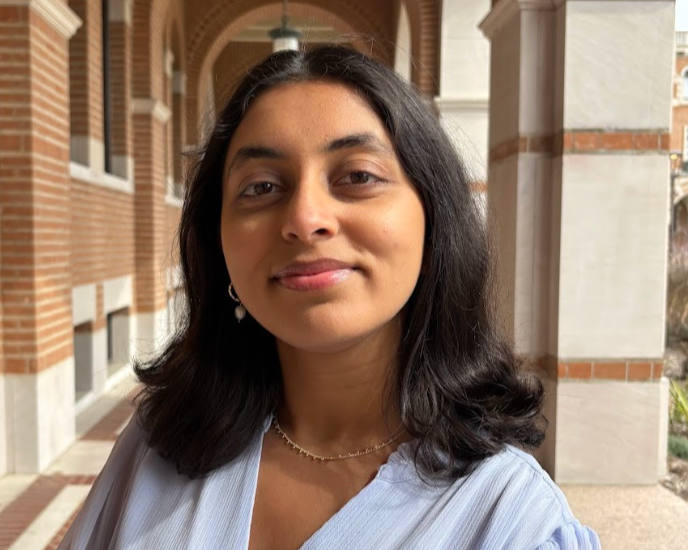
I pretty much jumped to apply. I was debating between a few sections, but I ended up choosing Breakthroughs because of the opportunity to actually talk to experts, subject matter experts, and hear their perspective. I wanted to learn more about the cutting-edge work being done here, what their day-to-day life looks like, and how the entire research process works from start to end. I even had a professor in mind when I applied. Breakthroughs felt like the perfect way to talk to him and share his research in a scientific format… I’m a sophomore majoring in bioengineering and data science, and genomics, proteomics, and transcriptomics are spaces I’ve been incredibly interested in for a while. A lot of the innovation in this field is happening right here at Rice, so that personal connection mattered to me. I decided to interview Dr. Gang Bao. He’s been working for decades on making gene editing safer, first by identifying on-target and off-target effects, and now by engineering safer delivery mechanisms, especially using nanoparticles. Considering how new and dynamic this field is, especially with CRISPR emerging in the last decade, he’s really been a pioneer….Before even reaching out, I wanted to make sure I was well researched. I read his lab website, his recent papers, reviews in the field, just to make sure I could ask meaningful questions and interpret his insights accurately. After the interview, I stayed in communication with him to make sure everything I wrote was technically accurate and represented the lab properly… One of the most eye-opening things I learned was about in vivo gene editing: the idea of editing genes directly inside the patient. Right now, most gene editing is done in vitro, but that doesn’t work for diseases like muscle or heart disorders….Even though it was only a 30-minute interview, I learned so much. Being able to hear how he connected the past, present, and future of the field, and how his lab has been part of that evolution, was an incredible experience. Breakthroughs is technical, but its real strength is in these conversations. You’re translating scientific insights into something meaningful, something social and personal, not just technical. That’s the power of this kind of storytelling.
Ankita Rajesh
Connections | Jones | Co ‘28
“Amplifying Immunity: Mechanisms, Efficacy, and Promise of Self-Amplifying RNA Vaccines”
I started Catalyst my freshman year by writing an article for Attractions, which is geared more toward a general audience. I’m pre-grad, so I’ll be doing a lot of scientific writing in my life, and I’d never really done it before. Catalyst felt like a really good introduction. I really enjoyed that article, so this year I wanted to level up…Connections is more like a full research or review article, with a lot more detail and research, but I really enjoyed doing it. I chose to write about a newer form of vaccine technology called self-amplifying RNA. You might have heard of mRNA vaccines from COVID. This is kind of an elevated version that amplifies the immune response, lasts longer, and uses a lower dose…I became more interested in vaccine development this year, especially because vaccine hesitancy has grown so much. I wanted to understand the exact mechanisms of how vaccines work, because it’s not really a secret. Scientists aren’t trying to hide this information. I wanted to write something that could introduce this technology to the Rice community, so that if you see it in the news five years from now, you’re not like, ‘That’s scary, I don’t know how that works.’...It was also surprising how similar this new technology is to what we already have. It’s really not that different. It just encodes one gene that lets it self-amplify. That small change makes a huge difference. And a lot of this information was in open-source journals. It was cool to see how accessible it all was…Finishing the article was really rewarding. I wrote a 12-page, single-spaced research paper with 26 sources. I did the research, created the figures, and put everything together. It was the first full research paper I’d written that wasn’t for a class, and it proved to me that I can learn and communicate a complex topic in a relatively short amount of time….You don’t really realize how much time goes into research until you do it yourself, not just writing, but researching, editing, making figures, writing captions. It’s time-consuming, but it’s also really rewarding. I’d invite anyone who’s even slightly interested to try it. Catalyst has so many sections, and it doesn’t have to start with a full research paper.
Connections | Baker | Co ‘29
“Behavioral Epigenetics (how the environment regulates gene expression and affects human disease)”
I first found Catalyst on Instagram. I had just been admitted to Rice and was scrolling through different Rice accounts, looking for things I might want to get involved in. I came across Catalyst, and since I’m a Biosciences major and did journalism in high school, I thought it would be really cool to merge those two things together…For Connections, I liked the idea of being able to go deep into a topic. I knew I wanted to write about epigenetics, and I’ve always liked that subject. I didn’t really know what to expect coming in. In high school, journalism was more independent, and I didn’t have a big team around me. One thing that’s been really nice about Catalyst is that there are workshops, meetings, and people you can always go to for help. I’ve made a lot of friends through it…I’m writing about behavioral epigenetics, how your day-to-day experiences, or even your parents’ experiences, can shape how your genes are expressed…I had some background in epigenetics from high school, but there were gaps. I knew some terms, but not the implications. At Connections meetings, they showed me how to read academic papers and find sources to fill in those gaps. When I started reading real experiments and publications, I saw how epigenetics is being used in so many ways, especially in the medical field. I even got to talk to a professor here who works on targeted gene editing. I study biochemistry and anthropology, and epigenetics felt like the catch-all topic that connected everything I was interested in. What was really interesting was that after I decided on the topic, my bio and anthropology classes started covering it almost immediately. It kind of opened my eyes to how many people here could help me learn more, and it helped me connect with professors and classmates too…I really enjoy the editing process. Editors give feedback, I do some editing myself, and we leave supportive comments for each other. I actually ran into someone I was editing with the other day, and we talked about it for a while. Catalyst creates connections in a lot of different ways…When you look at a published piece, it looks cohesive and complete. But getting there takes a lot of drafts, edits, and people working together. That intensity behind the process. That’s something I didn’t really see before, and now I really appreciate it.