
A deep dive into the Ashwagandha frenzy – is it really worth it?

Comment

A deep dive into the Ashwagandha frenzy – is it really worth it?

For those of us that have been chronically online in the last several months and are prone to adopting the newest ‘hacks’ for how to improve our health and lifestyle with every headline we see, the name of one substance is easily recognized - Ashwagandha. This medicinal plant, scientifically known as Withania somnifera, is a staple in Ayurvedic and indigenous medicine and is known by herbalists to have antioxidant, anti-inflammatory, and immunomodulatory effects (Bharti et al., 2016). Recently, there have been claims from users of ashwagandha that they experience immense stress relief, boosted confidence, and increased drive and motivation – seemingly raising the herb to a magical pedestal (Pelc, 2023). 

But, how true are these claims, and is ashwagandha really worth the hype?

Scientifically speaking, several studies affirm that ashwagandha can stimulate cell-mediated immunity, such as killing microorganisms, repairing DNA of an inflamed cell, and increasing the amount of beneficial gut microbiota in the body – thereby working well towards managing immune-suppressed diseases, with the most recent study coupling ashwagandha with COVID-19 immune-boosting (Panda et al., 2021). As an Indian ayurvedic medicinal plant, ashwagandha has also been used to alleviate the symptoms of neurodegenerative disorders and is grown on a commercial scale in several Indian states (Murthy et al., 2010). In fact, somnifera - the formal name for ashwagandha itself - in Latin is an ode to a “sleep-inducer”, which is yet another prominent effect of ashwagandha as a stress reliever (Murthy et al., 2010). 

Where, one might ask, is the doubt here? The biggest difference between the ashwagandha used in herbal care versus Western commercial products is that, based on Ayurveda, herbal preparation, known as “rasayana”, is a long process of creating an elixir that nonspecifically increases human health. In the case of ashwagandha, this most commonly includes boiling the fresh roots of Ashwgandha in milk to extract undesirable minerals (Murthy et al., 2010). However, there aren’t any direct signs that this methodology is used when creating American commercial products, which leads to the question of the efficacy of ashwagandha sold commercially in the United States. 

Recent research does support that ashwagandha use was associated with a decrease in stress and anxiety levels, but it cannot be considered a long-term solution for deeper physical, psychological, or physiological issues (Pelc, 2023). For example, according to nutritionist Brittany Craig at the Mount Sinai Hospital Cancer Center, ashwagandha only has mild to moderate effects on hormone levels, which impact libido, strength, and stress. She notes that claims on social media that place ashwagandha use at a high pedestal can be “misleading”, since their effects are often limited (Pelc, 2023). In addition, studies that show ashwagandha’s positive impacts have only been conducted with small populations and limited durations of under 12 weeks, which may explain why its use as a supplement may not be as commonly accepted as their results suggest (Pelc, 2023). Craig, as well as other researchers, note several studies claiming that while ashwagandha stimulates immune activity, it can have the adverse effect of exacerbating autoimmune diseases. 

Ashwagandha, meaning “smell of the horse” in Sanskrit, may seem to imply that the herb provides the strength and stamina of a horse to those who use it (Thompson, n.d.). However,  giving it the title of a magical pill may be taking it too far. More information should be publicized on the proper uses and expectations of ashwagandha so that its users (both current and potential) experience the most accurate benefits to their health.

References

Bharti, V. K., Malik, J. K., & Gupta, R. C. (2016, February 19). Ashwagandha: Multiple health benefits. Nutraceuticals. https://www.sciencedirect.com/science/article/abs/pii/B9780128021477000528 

Murthy, M. R. V., Ranjekar, P. K., Ramassamy, C., & Deshpande, M. (1970, January 1). Scientific basis for the use of Indian Ayurvedic medicinal plants in the treatment of neurodegenerative disorders: 1. ashwagandha. Latest TOC RSS. https://www.ingentaconnect.com/content/ben/cnsamc/2010/00000010/00000003/art00004 

Panda, A. K., & Kar, S. (2021). Ayurvedic immuno booster: Is it myth or reality in COVID-19 pandemic. International Journal of Current Research and Review, 13(01), 134–140. https://doi.org/10.31782/ijcrr.2021.13140 

Pelc, C. (2023, October 24). Ashwagandha: Does it really lower stress and benefit health?. Medical News Today. https://www.medicalnewstoday.com/articles/how-accurate-are-the-claims-about-ashwagandhas-benefits 

Thompson, K. (n.d.). Ashwagandha monograph. HerbRally. https://www.herbrally.com/monographs/ashwagandha#:~:text=The%20common%20name%20comes%20from,who%20take%20it%20(5).
Comment


Bio-Art: The Cross Between Science and Art

Comment

Bio-Art: The Cross Between Science and Art

When thinking about works of art, science may be the complete opposite of what comes to mind. But bio-art, a genre of art categorized by its avant-garde methods of displaying life, is bridging the gap between these two seemingly unrelated areas. Often, these artists collaborate with scientists and labs to express beauty or provoke thought through biotechnology, using techniques such as cell culturing and genomic editing to create art.

One of the earlier and most impactful pieces of bio-art was Eduardo Kac’s GFP Bunny, which was a rabbit by the name of Alba who glowed green through the use of genetic engineering. In order for Alba to be created, Kac worked with a biological research laboratory. This prompted questions about where the credit was due and how the life forms used are treated, not only for GFP Bunny but also for other major works of bio-art that require collaboration between different fields. This work has sparked much dialogue on the ethics and moral implications of bio-art and has been referenced in shows such as Big Bang Theory, the Simpsons, and Sherlock. 

Another prominent bio-art piece is a work titled Victimless Leather, created by artists and researchers Oron Catts and Ionat Zurr. Both artists were research fellows at Harvard Medical School before turning their attention to bio-art. In this piece, cell lines are used to culture tissue on a jacket shaped polymer matrix, a process very similar to the way that artificial organs are grown. The work is meant to explore the potential consequences of using biotechnology for commercial purposes and prompt reflection on the sources of the clothes we wear. Among Catts and Zurr’s other innovative bio-art pieces are Semi-living Worry Dolls, Better Dead Than Dying, and Stir Fly: Nutrient Bug 1.0

With many works of bio-art comes discussion about its ethics. Should any form of life be used in art? Where do we draw the line when it comes to using life in art? Is bio-art taking away from resources that could be used to further biomedical research? Certainly an argument can be made in favor of bio-art because it can draw attention to existing biological controversies like animal testing, genomic editing, and cell culturing (although, on the other hand, this could be done through other mediums.) Bio-art may have the capability to increase public awareness of what goes on in biological research laboratories, but some may believe that this form of art often feeds into what its artists are supposedly fighting against.

While the ethics of bio-art remain a big question, this relatively new form of art has been connecting society with research laboratories through the creation of what could be considered emotional, shocking, and even disgusting projects. At its most basic level, bio-art is about not only aesthetics, but also provoking discussion and thought surrounding difficult but important topics.

References

GFP bunny. (n.d.). https://www.ekac.org/gfpbunny.html 

Victimless Leather. The Tissue Culture & Art Project. (n.d.). https://tcaproject.net/portfolio/victimless-leather/ 

What is Bio Art?. ARTDEX. (n.d.). https://www.artdex.com/what-is-bio-art/

Comment


Turning Waste into Wellness: The Power of Fecal Matter in Medicine

Comment

Turning Waste into Wellness: The Power of Fecal Matter in Medicine

It is not the most pleasant substance. Its notorious smell and inextricable connection to potty humor make it an unappealing subject for many. However, its healing abilities offer a promising treatment for Autism Spectrum Disorder symptoms. What is this mysterious substance? Human fecal matter - also known as poop. 

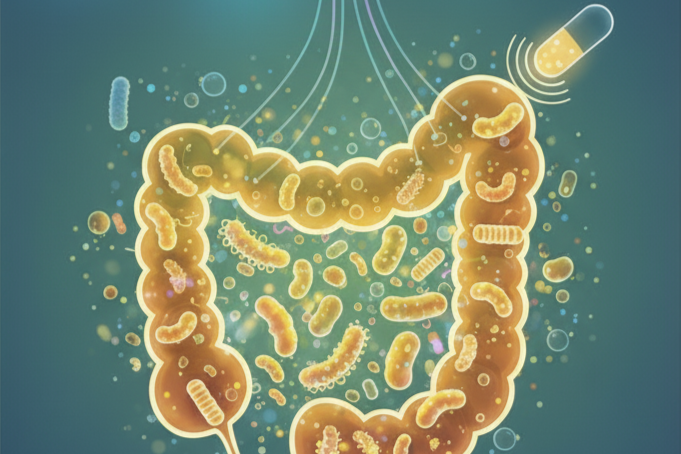
In a procedure known as fecal microbiota transplantation (FMT), human stool from healthy donors is introduced into a patient’s gut through a colonoscopy or a pill (Gupta et al., 2016). The healthy bacteria from the donor’s stool can positively impact the patient’s imbalanced intestinal microbiome. The intestinal microbiome is a collection of countless microorganisms such as bacteria, archaea, and viruses found in the gastrointestinal tract (Gupta et al., 2016). These microorganisms support various bodily processes, but they can be impaired by environmental factors and infectious diseases. FMT is highly effective in treating some of these infectious diseases. For example, it is up to 90% effective in curing recurrent infections of Clostridium difficile bacteria (Wang et al., 2019). 

Recent research has extended the potential applications of FMT to address the symptoms of Autism Spectrum Disorders (ASDs). This diverse group of neurodevelopmental disorders typically leads to distinct patterns of behavior (difficulty in deviating from routines, repetitive movements, and fixations on specific objects or activities) and other social communication issues that impair one’s ability to hold a conversation or detect various social cues (“Autism Spectrum Disorder,” 2018). ASDs affect approximately one in fifty-nine individuals in the United States (Sharon et al., 2019). Many studies indicate a link between abnormal gut microbiota and ASD (Kang et al., 2019). Children with ASD who experience food sensory issues are more likely to face gastrointestinal problems due to deficits in calcium and protein intake. There are not many medical treatments available for these symptoms of ASD (Kang et al., 2019). Behavioral therapy can help improve social skills and issues with communication, but it does not address physical problems in the body. This is where FMT comes into play. 

A study conducted by researchers at Arizona State University found promising results when combining FMT with bowel cleanses and antibiotics to treat children with ASD. After an eighteen-week trial, they observed an 80% reduction in gastrointestinal symptoms of ASD. When they re-evaluated participants two years later they found significant improvements in gastrointestinal and behavioral symptoms (Kang et al., 2019). These findings found support in subsequent studies that investigated the impacts of FMT on gastrointestinal symptoms and metabolic profiles of people with ASD (Martínez-González & Andreo-Martínez, 2020). However, further research is needed to validate this link between FMT and the improved health of patients with ASD. These additional studies should consider the diverse spectrum of ASD severity and the differences in methodologies used to measure ASD behaviors (Martínez-González & Andreo-Martínez, 2020).

These results are not only exciting because they can help such a large number of people, but also because they highlight the potential of treatments derived from readily available materials. The world is in an exciting era of medical innovation and amazingly complex medical technology, but FMT serves as a reminder that we don't always need highly specialized tools to start helping patients in need. Sometimes, using what we already have – in this case, an abundance of human fecal matter – can lead to significant medical breakthroughs.

References

Gupta, S., Allen-Vercoe, E., & Petrof, E. O. (2016). Fecal microbiota transplantation: in perspective. Therapeutic Advances in Gastroenterology, 9(2), 229–239. https://doi.org/10.1177/1756283X15607414

Kang, D. W., Adams, J. B., Coleman, D. M., Pollard, E. L., Maldonado, J., McDonough-Means, S., Caporaso, J. G., & Krajmalnik-Brown, R. (2019). Long-term benefit of Microbiota Transfer Therapy on autism symptoms and gut microbiota. Scientific Reports, 9(1), 5821. https://doi.org/10.1038/s41598-019-42183-0

Martínez-González, A. E., & Andreo-Martínez, P. (2020). Prebiotics, probiotics and fecal microbiota transplantation in autism: A systematic review. Revista de psiquiatria y salud mental, 13(3), 150–164. https://doi.org/10.1016/j.rpsm.2020.06.002 

Autism Spectrum Disorder. (2018, January 6). Mayo Clinic. https://www.mayoclinic.org/diseases-conditions/autism-spectrum-disorder/symptoms-causes/syc-20352928

Sharon, G., Cruz, N. J., Kang, D. W., Gandal, M. J., Wang, B., Kim, Y. M., Zink, E. M., Casey, C. P., Taylor, B. C., Lane, C. J., Bramer, L. M., Isern, N. G., Hoyt, D. W., Noecker, C., Sweredoski, M. J., Moradian, A., Borenstein, E., Jansson, J. K., Knight, R., Metz, T. O., … Mazmanian, S. K. (2019). Human Gut Microbiota from Autism Spectrum Disorder Promote Behavioral Symptoms in Mice. Cell, 177(6), 1600–1618.e17. https://doi.org/10.1016/j.cell.2019.05.004

Wang, J. W., Kuo, C. H., Kuo, F. C., Wang, Y. K., Hsu, W. H., Yu, F. J., Hu, H. M., Hsu, P. I., Wang, J. Y., & Wu, D. C. (2019). Fecal microbiota transplantation: Review and update. Journal of the Formosan Medical Association, 118 Suppl 1, S23–S31. https://doi.org/10.1016/j.jfma.2018.08.011 


Comment


From Induced Bacterial Infections to Revolutionary Cancer Treatment: The History of Immunotherapy

Comment

From Induced Bacterial Infections to Revolutionary Cancer Treatment: The History of Immunotherapy

It’s the late 1800s. You’ve been diagnosed with an untreatable form of bone cancer, and an experimental approach is your best bet. Fortunately, you’ve been lucky enough to be treated by the best of the best, Dr. William Coley: head of the Bone Tumor Service at Memorial Hospital in New York City (McCarthy, 2006). However, the course of treatment is not what you’d expect: injecting a bacterial mixture known as“Coley’s Toxins” (McCarthy, 2006).

While late 19th century hospitals were a major advancement in offering accessible medical care, they were also petri dishes offering the perfect environment for the spread of disease. Prior to the development of modern sterilization, known as aseptic technique, a bacterial infection called erysipelas, coined “St. Anthony’s Fire,” commonly plagued hospitals (Gianfranco et al, 2021). This skin infection, eventually serving as the inspiration for Coley’s toxin mixture, was named to describe both the burning sensation that patients experienced as well as the speed through which it swept through hospitals (Graeber, 2018). 

In 1891, Coley was tasked with performing a surgery on a patient’s bone cancer after a similar surgery seven years prior (2006). After a successful surgery, the patient fell ill with erysipelas. Although frequently fatal, the patient not only survived the infection, but his tumor shrunk significantly (2006). Coley hypothesized that there may be a connection between the bacterial infection and the rapid tumor eradication, and dedicated his career to the development of “Coley’s Toxins” (Graeber, 2018). As Coley’s experiments preceded a strong understanding of the immune system, their potential was limited. Although controversial and unethical, Coley’s contributions opened a door into curiosity about the immune system and led toa foundational understanding upon which many treatment options would be based. Today, scientists can understand that the bacterial infection was somehow activating the immune system and serving as a catalyst for a response against the patient’s cancer.

Notably, some of the greatest modern immunotherapeutic developments are checkpoint inhibitors and CAR T-cell therapy. Checkpoint inhibitors act on the cell growth and division cycle. This cycle is regulated by checkpoints that allow the body to trigger apoptosis (cell death) if the cell is too damaged to divide. But, cancer cells have mechanisms to sneak through these checkpoints, and continue to pass on their damaged DNA to create more cancer cells. Checkpoint inhibitors allow the immune system to recognize and destroy cancer cells (Eno, 2017). Conversely, CAR T-cell therapy allows for a personalized immunotherapeutic approach. In this process, a patient’s T-cells (cells that attack threats in the body) are collected and genetically modified with a Chimeric Antigen Receptor (CAR) gene specific to the patient’s cancer cells. Then, these T-cells are allowed to proliferate, and finally returned to the patient's body to fight their particular cancer cells (NIH, 2022). 

Although historical procedures like “Coley’s Toxins” may seem outlandish at times, they provide the grounds for generating questions: the fabric of scientific investigation. Experiments being conducted today, although we may not fully understand their results, could provide foundational insight into the treatments of tomorrow.

References:

Cervellin, Gianfranco et al. “One holy man, one eponym, three distinct diseases. St. Anthony's fire revisited.” Acta bio-medica : Atenei Parmensis vol. 92,1 e2021008. 11 Sep. 2020, doi:10.23750/abm.v92i1.9015

Dobosz, Paula, and Tomasz Dzieciątkowski. “The Intriguing History of Cancer Immunotherapy.” Frontiers in immunology vol. 10 2965. 17 Dec. 2019, doi:10.3389/fimmu.2019.02965

Eno, Jessica. “Immunotherapy Through the Years.” Journal of the advanced practitioner in oncology vol. 8,7 (2017): 747-753.

Graeber, Charles. The Breakthrough: Immunotherapy and the Race to Cure Cancer. New York, Twelve, 2018. 

McCarthy, Edward F. “The toxins of William B. Coley and the treatment of bone and soft-tissue sarcomas.” The Iowa orthopedic journal vol. 26 (2006): 154-8.

National Institute of Health. “CAR T Cells: Engineering Patients' Immune Cells to Treat Their Cancers.” National Cancer Institute. https://www.cancer.gov/about-cancer/treatment/research/car-t-cells. 10 Mar, 2022.

Comment


The Science Behind Mansplaining: Why does it happen, and what are its effects?

Comment

The Science Behind Mansplaining: Why does it happen, and what are its effects?

It’s a universal experience. A classmate reiterating the discussion post you wrote. A friend condescendingly explaining politics to you. A colleague explaining the answer to a question that you never asked. Mansplaining has been found to happen in any relationship, whether it be strangers, coworkers, friends, or romantic partners (Conner et al., 2018). No woman is immune from the mansplaining epidemic.

The linguistics of the term stems from a combination of the words “man” and “explain,” which is obvious. However, the term actually originated from an essay by Rebecca Solnit entitled Men Explain Things to Me (2014). While she didn’t intend to create this trending word, her story about a man explaining her own book to her opened up conversations about the male pattern of giving condescending and unsolicited explanations to women. 

But what compels men to mansplain?

A key factor is the confidence disparity between men and women. Especially in academic settings, men have more self-confidence than women (Gavinski et al., 2020). They are more likely to answer a professor’s question whether they have the right answer or not, cut off a woman to give their own insight, and mansplain topics to women even if those women are more educated on the topic. Society expects men to be assertive, so from a young age, their sense of confidence is bolstered. Conversely, from a young age, women are taught to be submissive, thus not gaining the same experience with being confident. This difference in early socialization of the sexes clearly has lasting impacts (Leaper and Friedman, 2007). The early male pattern of confidence strengthens the synaptic connections of neurons in the brain (Bloom, 2021). Simply put, the more experience a person has at being confident, the more confident they will be in the future because they have literally hard-wired their brain to be like that. 

False perceptions of gendered competency also contribute to the culture of mansplaining. For instance, in Solnit’s essay, she wrote that she did not interrupt the man in her story, believing that he must have been discussing some other book that she was not aware of. In Yale University’s famous “John vs. Jennifer” study, researchers found that faculty at the top-ranked institutions nationwide were biased toward male students when evaluating identical applications (Moss-Racusin et al., 2012). This internalized sexism contributes to societal perceptions that men are inherently more capable and knowledgeable, thus making it socially acceptable for men to belittle women through mansplaining.

Oftentimes, men also mansplain to express their masculinity and assert their knowledge about academic issues (Buerkle, 2019). Stemming from arrogance and privilege, mansplaining has hurt everyone. In Hispanic culture, we use the word machismo to explain this concept of masculine pride and dominance. It’s these ideas of machismo that fuel a man’s instinct to mansplain. Not only does this offend the woman who is the target of the mansplaining, but these harmful gender norms are linked with depression, anxiety, anger, and cynical hostility for all parties involved (Nunez et al., 2017).

Mansplaining imbalances power dynamics in the workplace, ultimately leading to the exclusion of women from male-dominated career fields (Knowles, 2019). If a woman feels underappreciated in a social or professional setting, whether as a colleague or peer, this can discourage her from further pursuing her field of interest. 
The science speaks for itself. Mansplaining is a real issue permeating our society that promotes harmful gender stereotypes normalizing silent women and arrogant men. 


References

Bloom, S. (2021). Your brain on confidence: fake it ‘til you make it. Wall Street Journal. Retrieved from https://deloitte.wsj.com/cmo/your-brain-on-confidence-fake-it-til-you-make-it-01616439745. 

Buerkle, C. W. (2019). Adam Mansplains everything: White-hipster masculinity as covert hegemony. Southern Communication Journal, 84(3), 170–182. https://doi.org/10.1080/1041794x.2019.1575898 

Chernouski, L., O’Neil, D., & Knowles, R. A. (2019). Mansplaining: The Effects of Gendered Language and Speech Practices on Women. In Proceedings of the third Purdue Linguistics, literature and Second language studies conference (pp. 30–44). essay, Cambridge Scholars Publishing. 

Conner, B., McCauliff, K., Shue, C., & Stamp, G. H. (2018). Explaining Mansplaining. Women & Language, 41(2), 143–167

Gavinski, K., Cleveland, E., Didwania, A. K., Feinglass, J. M., & Sulistio, M. S. (2020). Relationship between confidence, gender, and career choice in Internal Medicine. Journal of General Internal Medicine, 36(3), 662–667. https://doi.org/10.1007/s11606-020-06221-2 

Moss-Racusin, C. A., Dovidio, J. F., Brescoll, V. L., Graham, M. J., & Handelsman, J. (2012). Science faculty’s subtle gender biases favor male students. Proceedings of the National Academy of Sciences, 109(41), 16474–16479. https://doi.org/10.1073/pnas.1211286109 

Nuñez, A., González, P., Talavera, G. A., Sanchez-Johnsen, L., Roesch, S. C., Davis, S. M., Arguelles, W., Womack, V. Y., Ostrovsky, N. W., Ojeda, L., Penedo, F. J., & Gallo, L. C. (2016). Machismo, marianismo, and negative cognitive-emotional factors: Findings from the Hispanic Community Health Study/study of Latinos sociocultural ancillary study. Journal of Latina/o Psychology, 4(4), 202–217. https://doi.org/10.1037/lat0000050 

Comment