Hearing Without our Ears

Comment

Hearing Without our Ears

Writer: Nyansu Chen

“Who is that? Is that my voice?!”

Ever wonder why our voices sound so different when we hear them in a recording versus in reality? Typically, the pathway of sound processing is as follows: Sound waves travel through the air into your ear, hitting the eardrum and vibrating tiny bones inside. The cochlea then converts these vibrations into signals that your brain can interpret as sound. [1]

So, when we speak, how are we hearing ourselves without our ears funneling sound waves? Turns out, our bones serve more than just as skeletons—they have the power to transfer sounds. Vibrations of our skull are directly transmitted through our inner ear, resulting in a different perceived sound of our own voices.

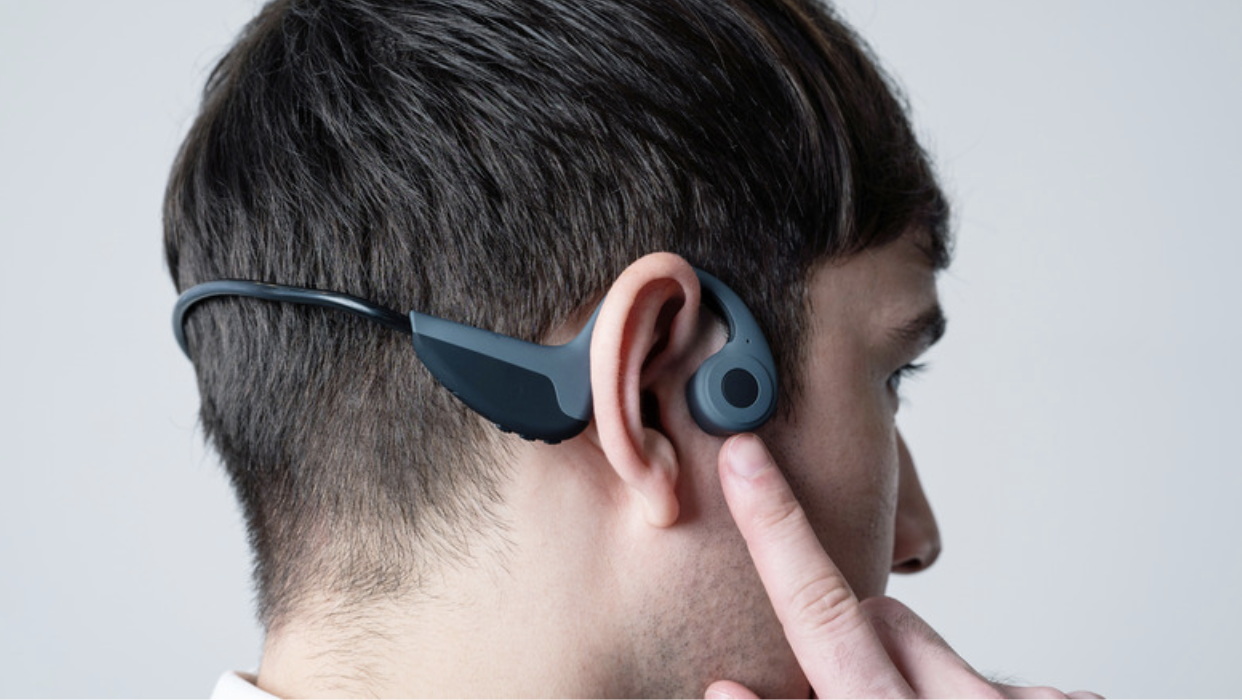
And this pathway is what leads us to bone conduction headphones!

The concept of hearing through bone conduction is not as new as it may seem. As early as the 1500s, Italian physician Girolamo Cardano discovered that sound could transmit through bone using a metal rod. [2] Centuries later, famous composer Ludwig van Beethoven (known for composing legendary pieces even after becoming completely deaf) would reportedly place a rod between his piano and his teeth to “hear” music. [3]

Fast forward to 1992, Mr. H. Werner Bottesch redesigned this concept and patented the first bone conduction headphone design in the U.S. [4] The product was designed to transmit sound through the bones surrounding the ear, allowing users to listen to music without obstructing their ear canals. Ten years later, the first commercially available bone conduction headphones were released on the market.

So how does it work? Similar to how our voices bypass the outer and middle ear to send vibrations directly through the bones around our ear, bone-conducting headphones send vibrations that skip the eardrum and transmit directly to the cochlea. This allows us to hear sounds more clearly because the headphones don’t cover our ears, so outside noises can still reach us while we listen to music or talk.

As such, bone conduction headphones are increasingly utilized across various fields. For instance, military personnel and first responders use bone conduction headsets to communicate while staying aware of their surroundings. Athletes also use them for training, as they can listen to coaching feedback without tuning out nearby traffic or teammates. What’s especially promising is the integration of bone conduction technology into hearing aids. Also known as osseointegrated or bone-anchored devices, these can be implanted surgically or worn externally to treat hearing loss caused by damage to the outer or middle ear. [5]

Audiologists are actively exploring how bone conduction technology can enhance hearing health, particularly by improving hearing aid capabilities for individuals with outer or middle ear damage, and by developing more effective solutions for age-related hearing loss. Researchers are also working to refine the integration of bone conduction with digital sound processing systems, which can provide clearer sound quality and greater personalization. As bone conduction technology evolves, advancements will enable greater integration into our lives, whether through subtle hearing devices or expanded use in clinical settings for treating hearing loss.

References:

[1] Bone Conduction Hearing Aids. Johns Hopkins Medicine. Published July 18, 2022. https://www.hopkinsmedicine.org/health/treatment-tests-and-therapies/baha--the-implantable-hearing-device
[2] Hear with Bone: The Evolution of Bone Conduction Headphones. Teksun: Cultivating Technology. Published July 3, 2024. https://teksun.com/blog/hear-with-bone-the-evolution-of-bone-conduction-headphones/
[3] Smith, A. Published March 4, 2017. The history of bone conduction technology. Shokz. https://shokz.com/blogs/news/the-history-of-bone-conduction
[4] Bottesch, H. Werner; Bottesch, H. Werner. Bone-conductive stereo headphones, US5323468A. 1992. https://patents.google.com/patent/US5323468A/en?inventor=Bottesch&assignee=H.+Werner&oq=H.+Werner+Bottesch
[5] Traynor, R. Published November 12, 2024. Bone conduction headsets: Bad to the Bone. https://hearinghealthmatters.org/hearing-international/2024/bone-conduction-headsets/
[6] Bone Conduction Headphones Analysis 2025 and Forecasts 2033. Published May 3, 2025. https://www.archivemarketresearch.com/reports/bone-conduction-headphones-509850#summary

Comment


Wired for Fire: The biological basis for spice tolerance and how it can be built with exposure to greater spice levels.

Comment

Wired for Fire: The biological basis for spice tolerance and how it can be built with exposure to greater spice levels.

Writer: Grace Zhang

From Nashville hot chicken to cups of fruit doused with Tajín and chamoy, spicy foods are on fire in modern-day pop culture. Carolina Reaper challenges are all the rage nowadays, and companies are rolling out “World’s Hottest” products like chips, gummy bears, and chocolate bars as if there’s no tomorrow. It’s safe to say that the world loves all things spicy–but scientifically speaking, what is it about peppers that makes them burn? What chemical molecules are in a dash of hot sauce, and how do we perceive the sensation of eating something spicy? What exactly is spice?

It turns out that there is a specific compound responsible for spice. Capsaicin, a vanilloid of the Capsicum family, is a common tissue irritant that evolved in plants as a defensive mechanism against predators and other pathogens [1]. When ingested or put in contact with skin, capsaicin binds to TRPV1, a key receptor located on the outside of cells, activating the mammalian pain pathway [2]. Conventionally, the strength of a given capsaicinoid is measured according to the Scoville Heat Unit Scale, starting from a bell pepper at zero units to pure capsaicin at 16,000,000. For reference, the Da Bomb hot sauce from the show “Hot Ones” clocks in at roughly 135,600 Scoville units [3].

Capsaicin selectively activates certain nociceptors, or specialized neurons that detect pain signals, tricking your nerves into thinking your mouth is on fire in the absence of any real heat [4]. This effect, however, slowly decreases the more spice you eat. Due to its influence on receptors that control pain, researchers have found that regular consumption of spicy foods raises your pain tolerance over time [5]. Eating it once can induce analgesia, or the temporary inability to feel pain. Capsaicin also activates the body's natural painkillers, which are the same opioid receptors that release endorphins, your brain's feel-good chemicals. In short, spice is soothing after a brief flare of pain. That rush of endorphins makes the experience oddly addictive, which might explain why people keep reaching for another bite even when they seem to be in agony.

We’ve discussed how capsaicin can induce a burning sensation by activating pain pathways. So what happens when you realize that the wings you ordered are way hotter than you can handle? The best move is to reach for milk or other dairy products that contain fat and a milk protein called casein. Because capsaicin is an oil-based molecule, drinking milk with a nonzero fat content will help wash it away, similar to how soap removes oil [6]. Furthermore, casein may contribute to breakdown of capsaicin molecules, further relieving spice-induced pain.

Capsaicin can affect your health in many ways. Some studies have linked high spice consumption to higher risks of certain cancers, particularly those of the throat, stomach, and gallbladder. [7]. But other research suggests that capsaicin may actually boost metabolism: people who eat more spicy foods tend to have lower rates of obesity. Additionally, capsaicin could potentially slow metabolic aging processes [8].

Spicy foods have been around for thousands of years, and they’re not going away any time soon [7]. By understanding the biological mechanism of spice, as well as the potential side effects of consuming capsaicin, we are able to make more educated decisions about our individual food choices. As a society, we can conduct research into the science of pain and perception, improving our understanding of how the human body works. So, whether you live for the burn or not, we can all agree on one thing: capsaicin is definitely one way to add a little spice to our lives.

References

[1] Sunil A, Javaheri D. The evolution of capsaicin in chili peppers. Journal of Student Research. 2024;13(3):1–7. doi:https://doi.org/10.47611/jsr.v13i3.2590 

[2] O’Neill J, Brock C, Olesen AE, Andresen T, Nilsson M, Dickenson AH. Unravelling the mystery of capsaicin: A tool to understand and treat pain. Pharmacological Reviews. 2012;64(4):939-971. doi:https://doi.org/10.1124/pr.112.006163 

[3] Da Bomb Beyond Insanity Hot Sauce, 4oz. HOTSAUCE.COM. Published 2025. Accessed October 18, 2025. https://www.hotsauce.com/Da-Bomb-Beyond-Insanity-Hot-Sauce/?srsltid=AfmBOoqIf8PL9GBy0PFu-6m88P0kmOePKDyKhqaK4QT9ndlDkXdsb59E 

[4] Fattori V, Hohmann M, Rossaneis A, Pinho-Ribeiro F, Verri W. Capsaicin: Current understanding of its mechanisms and therapy of pain and other pre-clinical and clinical uses. Molecules. 2016;21(7):844. doi:https://doi.org/10.3390/molecules21070844 

[5] Duan G, Wu Z, Duan Z, et al. Effects of spicy stimulation and spicy-food consumption on human pain sensitivity: A healthy volunteer study. The Journal of Pain. 2020;21(7-8):848-857. doi:https://doi.org/10.1016/j.jpain.2019.11.011 

[6] McCallum K. How To Cool Your Mouth Down After Eating Spicy Food. www.houstonmethodist.org. Published September 28, 2020. Accessed October 15, 2025. https://www.houstonmethodist.org/blog/articles/2020/sep/how-to-cool-your-mouth-down-after-eating-spicy-food/ 

[7] Ao Z, Huang Z, Liu H. Spicy Food and Chili Peppers and Multiple Health Outcomes: Umbrella Review. Molecular Nutrition & Food Research. 2022;66(23):2200167. doi:https://doi.org/10.1002/mnfr.202200167 

‌[8] Zhang N, Hong F, Xiang Y, et al. Spicy food consumption and biological aging across multiple organ systems: A longitudinal analysis from the China Multi-Ethnic cohort. Nutrition Journal. 2025;24(1). doi:https://doi.org/10.1186/s12937-025-01147-z 

Comment


The rising amount of Type 2 Diabetes cases amongst younger individuals in the US

Comment

The rising amount of Type 2 Diabetes cases amongst younger individuals in the US

Writer: Anish Kalva

Type 2 diabetes accounts for approximately 90-95% of all diagnosed diabetes cases among more than 38 million Americans, with symptoms often developing gradually over several years before detection. While traditionally considered a disease of middle-aged individuals, Type 2 diabetes is increasingly emerging as a critical health concern for younger generations [1]. But, what is Type 2 Diabetes anyway and why is it a concern for younger individuals as well? 

This disease develops when the body either can’t produce sufficient insulin or becomes resistant to the insulin it produces. When insulin resistance occurs, the pancreas attempts to compensate by producing more insulin, but eventually can’t keep up, leading to rises in blood sugar. These high blood sugar levels are a root cause of serious health complications, such as heart disease, vision loss, and kidney disease.

While Type 2 Diabetes most commonly develops in individuals aged 45 and older, there has been a concerning increase in the number of diagnoses among teens and young adults. [1] The United Kingdom experienced a nearly 40% increase in Type 2 Diabetes diagnoses among people under 40 [2]. Finally, almost 1% of high school students in North Texas were diagnosed, and nearly 1 in 10 had prediabetic conditions [3].

Globally, obesity has become the most common cause of malnutrition, rising to over 43% in America. The situation is equally concerning among youth, where nearly 1 in 5 U.S. children have obesity. Insufficient physical activity combined with poor dietary habits, particularly diets high in refined carbohydrates and foods with excessive sugar, fuel the rise in childhood obesity. Additionally, the frequent consumption of baked goods, fruit juices, and candy contributes to the excessive added sugar intake in children, potentially leading to insulin resistance and the development of prediabetic and Type 2 diabetic conditions [4].

Given the alarming rise of childhood obesity, implementing preventive measures early is essential to reducing the diabetes risk. Regular physical activity is one of the most effective interventions, such as walking for at least 30 minutes daily four to five times a week can significantly reduce the risk by increasing the frequency and intensity of activity.

Beyond exercise, dietary improvements play a crucial role. Rather than only reducing added sugar intake, individuals should focus on maintaining daily caloric intake at or below their daily caloric expenditure. Furthermore, consistent health monitoring through regular check-ups with a primary care physician, including cholesterol and blood sugar level screenings, can identify diabetes risk early and enable time for intervention before the disease develops [3].

With appropriate planning, healthcare support, and lifestyle modifications, the risk of Type 2 Diabetes, especially in youth, can be substantially reduced. Early intervention not only prevents the onset of diabetes, but also promotes overall health and longevity.

References:

  1. Centers for Disease Control and Prevention. Type 2 diabetes. Diabetes. Published May 15, 2024. https://www.cdc.gov/diabetes/about/about-type-2-diabetes.html

  2. The N. Alarming rise in young-onset type 2 diabetes. The Lancet Diabetes & endocrinology. 2024;12(7). doi:https://doi.org/10.1016/s2213-8587(24)00161-

  3. McGuire D. Protecting teens and young adults from Type 2 diabetes | Heart | UT Southwestern Medical Center. Utswmed.org. Published 2014. https://utswmed.org/medblog/teens-type-2-diabetes/

  4. Centers for Disease Control and Prevention. Childhood Obesity Facts. CDC. Published April 2, 2024. https://www.cdc.gov/obesity/childhood-obesity-facts/childhood-obesity-facts.html

Comment


The Mind of Tomorrow: Blurring the Line Between Human and Machine

Comment

The Mind of Tomorrow: Blurring the Line Between Human and Machine

They say the human brain is the most powerful computer, but what if we could unlock possibilities never considered before? What if the future of human evolution isn't just biological but digital? As technology advances, this reality may be closer than we think.

In 2016, Elon Musk funded the discovery of Neuralink, a brain implant to “achieve symbiosis with artificial intelligence.”¹ The goal was to allow paralyzed patients to control synthetic body parts and computers with their minds.1 The first patient who underwent this procedure, Noland Arbaugh, stated that his quality of life significantly improved after installing his Neuralink.2 He even gained the ability to play a game of chess by being able to “move the mouse around a screen just by thinking.”²,³ He hopes that, in the future, Neuralink will go so far as to enhance cognitive abilities.3 As of January 2025, three people have received Neuralink brain implants, and Musk aims to plant the device in 20-30 more people by the end of the year.⁴

Unlike many other common forms of technological development, Neuralink directly integrates into human physiology.4 However, with higher stakes comes more controversy. A study published in Nature Biotechnology discusses how brain-computer interfaces (BCIs) advance rapidly, enhancing cognitive function and restoring lost abilities.⁵ However, these possibilities also come with potentially destructive consequences. For example, the study also noted that the FBI’s 2023 cyber-threat bulletin warned that as BCIs become more widespread, the risk of ‘neurohacking’—where hackers manipulate brain signals—will increase.⁵ Neurohackers may be able to hack into someone’s body, causing them to perform tasks they wouldn’t usually do. This way, neurohacking could be a replacement way to facilitate serious crimes like murder. The possibility of the human mind being attacked could pose a serious issue with expansions in Neuralink and Musk’s ultimate goal.

Several sources go so far as to call Noland Arbaugh a “cyborg.” In 1960, Manfred Clynes and Nathan Kline coined the term “cyborg” as “a portmanteau of cybernetics and organism.”⁶(p139) But why should cyborgs be a concern in the first place?5 Science fiction movies have provided a few answers to this question. For example, numerous privacy concerns are raised, such as unauthorized tracking, data breaches, and the potential for governments or corporations to monitor and control individuals without their consent.6

This isn’t to say that the rise of cyborgs will lead to the dystopia commonly portrayed in Hollywood. Cyborgs are the inevitable future of society—some argue they already exist, and with the recent focus on the intersection between medicine and technology, the line between human and machine will only become less clear. Although many people have different views on cyborgs, the goal of each generation is not to escape technological innovation but to harness the potential of advancements to create a more advanced society.

As we are on the verge of a new era, the challenge lies in embracing progress rather than resisting it. As long as advancements such as Neuralink are guided by both advancement and ethics, they will enhance rather than diminish humanity. In the race toward brain-machine symbiosis, we must ask: will we control the technology, or will the technology control us?

References

  1. Kulshreshth A, Singh V, Sharma YK, Sharma K. Neuralink- an Elon Musk start-up achieve symbiosis with artificial intelligence. Presented at: 2019 International Conference on Computing, Communication, and Intelligent Systems (ICCCIS); October 2019. doi:10.1109/icccis48478.2019.8974470

  2. Hart R. Elon Musk says Neuralink’s first brain chip patient can control computer mouse by thought.7 Forbes. Published February 20, 2024. Accessed September 27, 2025. https://www.forbes.com/sites/roberthart/2024/02/20/elon-musk-says-neuralinks-first-brain-chip-patient-can-control-computer-mouse-by-thought/

  3. Brain chip patient plays online chess with his thoughts. Reuters. Published March 21, 2024. Accessed September 27, 2025. https://www.reuters.com/business/healthcare-pharmaceuticals/neuralink-shows-first-brain-chip-patient-playing-online-chess-2024-mar-21/

  4. Neuralink aims to implant up to 30 brain chips in 2025.8 Observer. Published January 13, 2025. Accessed September 27, 2025. https://www.observer.com/2025/01/elon-musk-neuralink-30-brain-implants-2025/

  5. Stavisky SD, Kao JC, Nuyujukian P, Ryu SI, Shenoy KV. Plug-and-play control of a brain–computer interface through neural manifold discovery. Nat Biotechnol. 2020;38(5):544-551. doi:10.1038/s41587-020-0434-0

  6. Sayem ASM. Digital fashion innovations for the real world and metaverse. Int J Fash Des Technol Educ. 2022;15(2):139-141. doi:10.1080/17543266.2022.2071139

Comment


The Double-Edged Nature of Prions

Comment

The Double-Edged Nature of Prions

One of the most gut-wrenching yet addictingly intriguing games I played growing up was Mafia. Sitting around a circle, discussing and debating the culprit…only for it to be the one person you thought was the healer!

The stealth and deception involved across the game reflect much more. Within our bodies, we see this play at a much larger scale across the immune system, manifesting as fevers, allergies, and other diseases. One prominent disease that often slips past our immune defenders, however, is prions. Our most secretive yet deadly macromolecules, prions, have the potential for immense harm but also surprising benefit.

But what exactly are they? Prions are a series of proteins that have become misfolded in a way that allows them to self-replicate, becoming independent of the cells in which they reside. They can be classified into three forms: prion proteins, responsible for forming prions, transcellular prionoids, misfolded proteins that aggregate through cell-cell interactions, and quasi-prions, anomalies in between prions and transcellular prionoids¹. Unlike viruses, bacteria, or even cells, prions are devoid of genetic material within their structure, with a mechanism of replication that varies based on how they have been misfolded. For instance, research on prions within the brain has shown that changes in electric charge may cause prion fibril elongation, leading the proteins to propagate and aggregate².

This aggregation mechanism often goes unnoticed by the immune system. As a biologically derived molecule, the prions are not viewed as foreign or antigenic by most immune cells. The most deadly is the neurodegenerative Creutzfeldt-Jakob disease (CJD), caused by overproduction of the prion protein, encompassing 85% of prion-disease forms in humans³. Variants of CJD spread dramatically due to mutation heritability and exposure to diseased tissue. In 1986, mad cow disease, a CJD that originated in cattle, spread to humans that ingested the meat, and was only controlled once infected herds were no longer consumed⁴. At a molecular level, it appeared that the abnormal prions in cattle were somehow modifying human prion development, indicating conserved mechanisms across species.

Prion disease manifestation can vary from person to person. CJD, for example, exhibits symptoms similar to many prevalent neurodegenerative diseases, making it hard to trace. Causing severe symptoms from confusion and dementia or hallucinations, the severe ailments that follow CJD still have very few treatment options⁵. Recent efforts have utilized a biotechnological approach to treating the disease, using tools such as gene editing with CRISPR-based tools, synthetic molecules and antibodies, and disinfectants⁶.

Like all biological phenomena, prions may have evolved to have unexpected positive effects. Due to their heritable nature, prions have the potential to pass on beneficial traits. A 2016 study at Stanford University found 46 prions in yeast cells that could improve the cell’s resistance to antifungals and heat⁷. With looser formations than their disease-causing counterparts, as well as a better affinity to DNA, these prions are more adaptable, ensuring better fitness of the cells containing these prions. Others like the CPEB prion-like proteins in the common fruit fly, Drosophila, have also shown potential to improve memory⁸.

For now, the legacy of prions in humans remains bleak. But could there be benefits to their existence? And, if we understand more prion-growth mechanisms, we might just alter our fundamental understanding of biology. This game of Mafia has just begun!

References

1. Harbi D, Harrison PM. ­Classifying prion and prion-like phenomena. Prion. 2014;8(2):161-165. doi:10.4161/pri.27960

2. UCL. Study reveals new detail on how prions replicate in neuronal cells. Brain Sciences. December 20, 2023. Accessed March 3, 2025. https://www.ucl.ac.uk/brain-sciences/news/2023/dec/study-reveals-new-detail-how-prions-replicate-neuronal-cells

3. Ritchie DL, Peden AH, Barria MA. Variant CJD: Reflections a Quarter of a Century on. Pathogens. 2021;10(11):1413. doi:10.3390/pathogens10111413

4. CDC. Bovine Spongiform Encephalopathy (BSE). Bovine Spongiform Encephalopathy (BSE). May 10, 2024. Accessed March 3, 2025. https://www.cdc.gov/mad-cow/php/animal-health/index.html

5. Prion Diseases. February 28, 2025. Accessed March 3, 2025. https://www.hopkinsmedicine.org/health/conditions-and-diseases/prion-diseases

6. Therapeutic Approaches for Prion Diseases | NIAID: National Institute of Allergy and Infectious Diseases. October 21, 2019. Accessed March 3, 2025. https://www.niaid.nih.gov/diseases-conditions/prion-therapeutic-approaches

7. Prions can pass on beneficial traits, study finds. News Center. Accessed March 3, 2025. https://med.stanford.edu/news/all-news/2016/10/prions-can-pass-on-beneficial-traits-study-finds.html

8.Prions: What Are They Good For? | Annual Reviews. Accessed March 3, 2025. https://www-annualreviews-org.ezproxy.rice.edu/content/journals/10.1146/annurev-cellbio-100913-013409#right-ref-B101

Comment