
Writer: Nyansu Chen
“Who is that? Is that my voice?!”
Ever wonder why our voices sound so different when we hear them in a recording versus in reality? Typically, the pathway of sound processing is as follows: Sound waves travel through the air into your ear, hitting the eardrum and vibrating tiny bones inside. The cochlea then converts these vibrations into signals that your brain can interpret as sound. [1]
So, when we speak, how are we hearing ourselves without our ears funneling sound waves? Turns out, our bones serve more than just as skeletons—they have the power to transfer sounds. Vibrations of our skull are directly transmitted through our inner ear, resulting in a different perceived sound of our own voices.
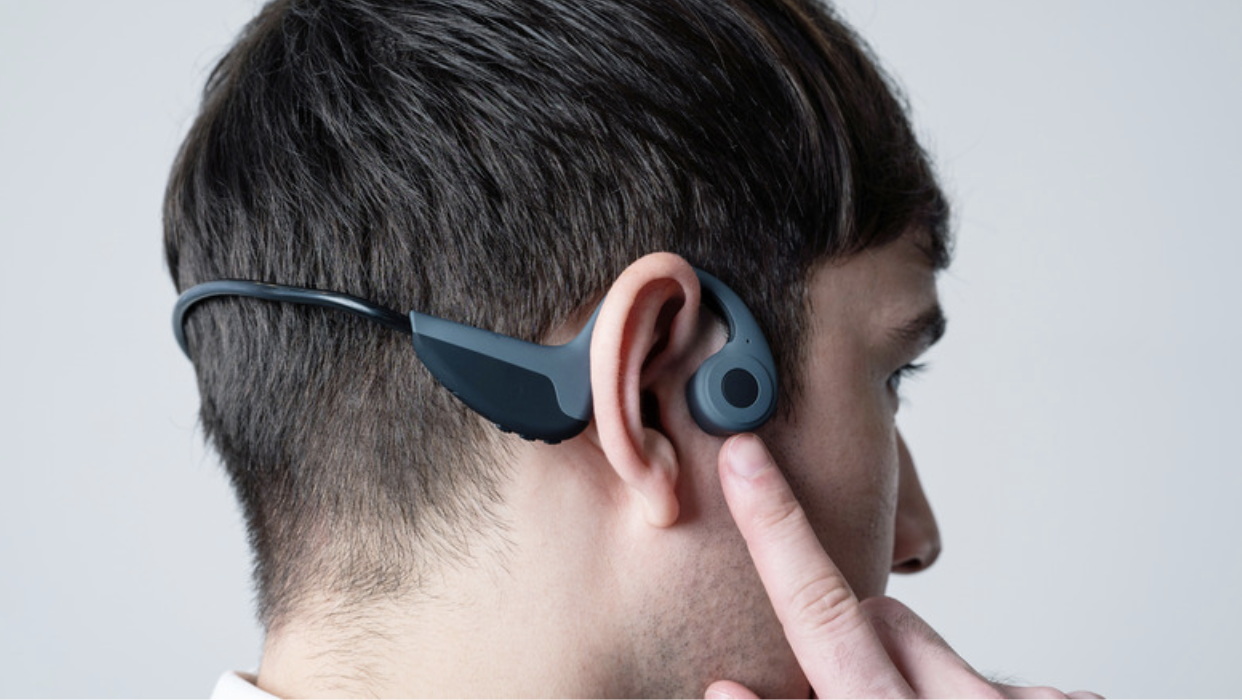
And this pathway is what leads us to bone conduction headphones!
The concept of hearing through bone conduction is not as new as it may seem. As early as the 1500s, Italian physician Girolamo Cardano discovered that sound could transmit through bone using a metal rod. [2] Centuries later, famous composer Ludwig van Beethoven (known for composing legendary pieces even after becoming completely deaf) would reportedly place a rod between his piano and his teeth to “hear” music. [3]
Fast forward to 1992, Mr. H. Werner Bottesch redesigned this concept and patented the first bone conduction headphone design in the U.S. [4] The product was designed to transmit sound through the bones surrounding the ear, allowing users to listen to music without obstructing their ear canals. Ten years later, the first commercially available bone conduction headphones were released on the market.
So how does it work? Similar to how our voices bypass the outer and middle ear to send vibrations directly through the bones around our ear, bone-conducting headphones send vibrations that skip the eardrum and transmit directly to the cochlea. This allows us to hear sounds more clearly because the headphones don’t cover our ears, so outside noises can still reach us while we listen to music or talk.
As such, bone conduction headphones are increasingly utilized across various fields. For instance, military personnel and first responders use bone conduction headsets to communicate while staying aware of their surroundings. Athletes also use them for training, as they can listen to coaching feedback without tuning out nearby traffic or teammates. What’s especially promising is the integration of bone conduction technology into hearing aids. Also known as osseointegrated or bone-anchored devices, these can be implanted surgically or worn externally to treat hearing loss caused by damage to the outer or middle ear. [5]
Audiologists are actively exploring how bone conduction technology can enhance hearing health, particularly by improving hearing aid capabilities for individuals with outer or middle ear damage, and by developing more effective solutions for age-related hearing loss. Researchers are also working to refine the integration of bone conduction with digital sound processing systems, which can provide clearer sound quality and greater personalization. As bone conduction technology evolves, advancements will enable greater integration into our lives, whether through subtle hearing devices or expanded use in clinical settings for treating hearing loss.
References:
[1] Bone Conduction Hearing Aids. Johns Hopkins Medicine. Published July 18, 2022. https://www.hopkinsmedicine.org/health/treatment-tests-and-therapies/baha--the-implantable-hearing-device
[2] Hear with Bone: The Evolution of Bone Conduction Headphones. Teksun: Cultivating Technology. Published July 3, 2024. https://teksun.com/blog/hear-with-bone-the-evolution-of-bone-conduction-headphones/
[3] Smith, A. Published March 4, 2017. The history of bone conduction technology. Shokz. https://shokz.com/blogs/news/the-history-of-bone-conduction
[4] Bottesch, H. Werner; Bottesch, H. Werner. Bone-conductive stereo headphones, US5323468A. 1992. https://patents.google.com/patent/US5323468A/en?inventor=Bottesch&assignee=H.+Werner&oq=H.+Werner+Bottesch
[5] Traynor, R. Published November 12, 2024. Bone conduction headsets: Bad to the Bone. https://hearinghealthmatters.org/hearing-international/2024/bone-conduction-headsets/
[6] Bone Conduction Headphones Analysis 2025 and Forecasts 2033. Published May 3, 2025. https://www.archivemarketresearch.com/reports/bone-conduction-headphones-509850#summary